
More Homes, Lower Costs
A supply-first proposal to expand housing affordability
Key Takeaways
- Over the past 25 years, new housing supply has remained consistently low, pushing the typical U.S. home price to more than five times the median household income — up from about three to four times in 2000.
- The root cause is regulations that prevent the expansion of housing supply: restrictive zoning, lot-size minimums, and lengthy permitting have made naturally affordable homes illegal or unprofitable to build in much of the country.
- A supply-first agenda centered on state-level land use reform, streamlined permitting, and light-touch density can unlock millions of homes each year without new subsidies.
The Challenge
America faces a housing shortage of an estimated 5.8 to 6 million homes, driving record costs, widening inequality, and eroding the path to family formation and middle-class stability.1 Over 25 years, home values have soared 162%; the national median home price now exceeds five times the median household income.2 A growing share of households spend more than half their pre-tax income on housing.3
This is not merely a social problem — soaring housing costs and a growing sense that homeownership is out of reach undermine Americans’ faith in institutions. Housing is also an economic competitiveness problem. When workers cannot afford to live near high-productivity job centers, labor markets seize up, businesses struggle to recruit, and growth is suppressed.
The root cause is regulation that artificially constrains housing supply. Zoning codes, lot-size minimums, parking mandates, and lengthy permitting processes create barriers that often make naturally affordable homes illegal or impractical to build across much of the country. Research by the AEI Housing Center finds that targeted land-use reforms could unlock up to 1.5 to 1.6 million additional homes per year.4 Houston illustrates the opportunity: after legalizing smaller lots in 1998, the city now maintains a price-to-income ratio of roughly 4:1. For Los Angeles, which continues to restrict smaller lots, the ratio is above 9:1 — and it has a homelessness rate nearly fifteen times higher than that of Houston.5
Chart
Growth in home prices has outpaced incomes since 1990
Ratio of median home price to median household income · Source: Harvard JCHS (2024)
For decades, Washington has focused on demand-side “fixes” — including cheaper financing, down-payment assistance, and tax incentives. But without more homes, expanded access to credit simply bids up prices. The chart below shows the structural gap between how many homes America actually builds each year and how many it needs.
Chart
Today’s housing shortage is the result of a 15-year building shortfall
Annual housing starts vs. estimated annual need, in millions of units · Source: Freddie Mac, U.S. Census Bureau, HUD
Leadership Now Position
Leadership Now seeks to mobilize business leaders as a key voice for modernizing land use policy to make it legal, feasible, and profitable to build more housing. Three principles guide our approach:
01
Supply, not subsidy, drives affordability.
Sustainable affordability arises from competition and abundance. The most effective way to lower housing costs is building a large volume of market-rate housing. Subsidies and tax credits alone cannot overcome restrictive zoning — and in some cases crowd out market-rate builders.
02
Local rules create national problems.
Housing supply is constrained by local zoning laws that limit density and lot size. Businesses across the country experience these costs directly and have an underutilized voice in this debate.
03
Family-sized homes matter.
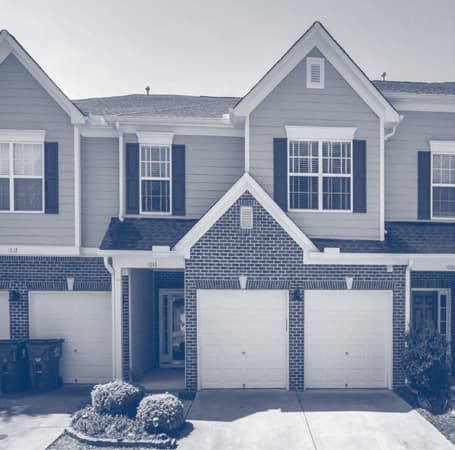
Families prefer single-family or small-scale homes with two or more bedrooms. Policies that incentivize only large apartment buildings undermine family formation and community stability. Light-touch density — duplexes, triplexes, townhomes, and small-lot homes — can expand supply while preserving neighborhood scale and meeting families' preferences.
Acting on these principles can deliver the supply, affordability, and family-sized homes the country needs.
This is a supply-first agenda, but it is not a subsidies-never agenda. Supply reform works best alongside targeted assistance for households who cannot access market-rate housing regardless of supply levels. That includes the lowest-income renters, people experiencing homelessness, and those facing structural barriers to ownership. We support maintaining a safety net while insisting it cannot substitute for the supply-side reforms that make housing broadly affordable.
These positions are designed to be relevant for near-term advocacy and durable through the 2028–2029 policy cycle. As federal momentum on supply reform grows — evidenced by strong bipartisan legislative action in the current Congress67 — the most consequential work remains at the state and local level, where most zoning, lot size, and permitting rules are actually set.
Policy Recommendations
State-Level — Primary Focus
- Legalize smaller lots. Limit minimum lot-size requirements to enable affordable, family-sized construction. The AEI Model Starter Homes Act provides a proven template; Texas and Florida have enacted comparable reforms and have experienced supply growth as a result.
- Enable light-touch density. Restore missing-middle housing — duplexes, triplexes, townhomes, and ADUs — in single-family zones. AEI research in Charlotte and Seattle shows that legalizing these unit types expands supply with no adverse effect on nearby home prices.
- Streamline permitting and by-right development. Standardize and accelerate approvals for small-scale infill and mixed-use housing, particularly in commercial and light-industrial zones. Eliminate discretionary review requirements that add years to routine projects.
- Reform local incentives. Tie state infrastructure or housing grants to local adoption of pro-housing zoning reforms. States should reward cities for measurable increases in housing completions.
- Expand data transparency. Incentivize cities and counties to publish zoning maps, permit timelines, and housing completions in order to benchmark progress, attract private capital, and enable accountability.
Federal-Level — Supportive Role
- Incentivize, but don't mandate, state reform. Federal housing grants should reward states and localities that adopt pro-housing land use policies, rather than overriding local authority. The federal government can accomplish more by making reform financially attractive.
- Streamline NEPA reviews. Reduce or eliminate burdensome federal environmental review requirements that add cost and time to housing construction without commensurate public benefit.
- Modernize manufactured housing definitions. Update the federal definition of manufactured housing to include modular and prefabricated designs, expanding the lower-cost end of the housing market.
- Responsibly sell or lease underutilized federal land. The federal government owns large tracts of land adjacent to fast-growing metros. AEI Housing Center research finds that selling just 0.1% of federal land could create space for roughly 3 million homes — without touching national parks or protected lands.
These recommendations are informed by the AEI Housing Center’s Strong Foundations Playbook, the Bipartisan Policy Center’s American Housing Act, the Economic Innovation Group’s Right-to-Build Zones proposal, and comparative city analyses.
Relevant Legislation
21st Century ROAD to Housing Act
Sens. Tim Scott (R-SC) & Elizabeth Warren (D-MA)
The most sweeping bipartisan housing legislation in decades. Its 40+ provisions cut red tape, streamline environmental reviews, modernize the manufactured housing definition, establish a $200 million grant program for localities that increase supply, and incentivize by-right zoning and reduced parking minimums near transit. The bill advances a market-based approach — no new net subsidies — while unlocking private capital and reducing permitting barriers. One concern is that Section 901 would require builders of single-family rentals to sell within seven years, potentially dampening new construction.
Housing for the 21st Century Act
Reps. French Hill (R-AR) & Maxine Waters (D-CA)
Includes provisions to publish HUD best-practice frameworks for state and local zoning reform, accelerate ADU and missing-middle construction through pattern-book grants, streamline HUD environmental reviews, and expand the Low-Income Housing Tax Credit. Its near-unanimous passage signals broad bipartisan consensus that the status quo is unacceptable.
Housing Supply Expansion Act
Sen. Ruben Gallego (D-AZ), bipartisan cosponsors
Modernizes the federal definition of "manufactured housing" to include modular and prefabricated homes built without a permanent chassis, enabling lower construction costs, greater neighborhood compatibility, and expanded access to homeownership. Endorsed by the National Low Income Housing Coalition and the Chamber of Progress.
Affordable HOMES Act
Rep. Erin Houchin (R-IN)
Removes regulatory barriers suppressing manufactured housing supply. Restores HUD as the primary regulator of manufactured housing and repeals duplicative Department of Energy rulemaking authority that has driven up construction costs. This bill directly expands the lower-cost end of the housing market.
Resources
- AEI Housing Center — Strong Foundations Playbook (6,600+ city/county analyses)
- AEI Housing Center — Model Starter Homes Act & Model Multifamily/Mixed-Use Act
- AEI Housing Center — Three Levers to Unlock 1.5 Million Homes a Year
- Bipartisan Policy Center — What's in the ROAD to Housing Act of 2025?
- Bipartisan Policy Center — What's in the Housing for the 21st Century Act?
- Economic Innovation Group — The Era of Federal Zoning Reform Has Arrived
- Urban Institute / Laurie Goodman — Housing Finance Policy Center
- Ivory Innovations — Little Book of Lessons Learned from State & Local Housing Initiatives
- Zillow / Casita Coalition — Build the Middle
- JP Morgan Chase — State and Local Housing Policy Brief
- U.S. Chamber of Commerce — Strong Foundations Housing Policy Platform
- The Washington Post — Portland has a wonky secret to building cheaper houses. Other cities are copying.
Endnotes
- 1.Pinto, E. J., & Peter, T. (2025, August 21). AEI Housing Center's model state legislation for starter homes and multifamily zoning reform. American Enterprise Institute. https://www.aei.org/research-products/report/aei-housing-centers-model-state-legislation-for-starter-homes-and-multifamily-zoning-reform/ ↩
- 2.Pinto, E. J., Peter, T., & Gailes, A. (2025). Strong foundations: A playbook for housing and economic growth. American Enterprise Institute & U.S. Chamber of Commerce. https://www.aei.org/strong-foundations-a-playbook-for-housing-and-economic-growth/ ↩
- 3.Waters, E., Orbach, R., & Hausman, L. (2026, February 11). What's in the Housing for the 21st Century Act? Bipartisan Policy Center. https://bipartisanpolicy.org/explainer/whats-in-the-housing-for-the-21st-century-act/ ↩
- 4.Remington, J., Ozimek, A., & Neuhardt, C. (2025, September 18). The era of federal zoning reform has arrived. Economic Innovation Group. https://eig.org/the-era-of-federal-zoning-reform-has-arrived/ ↩
- 5.U.S. Senate Committee on Banking, Housing, and Urban Affairs. (2026, March 5). The facts: The 21st Century Road to Housing Act cuts red tape, builds more homes, and restores accountability. https://www.banking.senate.gov/newsroom/majority/the-facts-the-21st-century-road-to-housing-act-cuts-red-tape-builds-more-homes-and-restores-accountability ↩
- 6.U.S. Senate Committee on Banking, Housing, and Urban Affairs. (2026, March 12). 21st Century ROAD to Housing Act passes Senate 89–10. See also: Bipartisan Policy Center summary of the ROAD to Housing Act provisions. ↩
- 7.Waters, E., Orbach, R., & Hausman, L. (2026, February 11). What's in the Housing for the 21st Century Act? Bipartisan Policy Center. Bill passed the House 390–9. https://bipartisanpolicy.org/explainer/whats-in-the-housing-for-the-21st-century-act/ ↩